After she was safely asleep, I sat at our little kitchen table under the yellow overhead light and stared at my phone. Outside the window I could see the glow from the gas station across the road and the flicker of someone’s television in the next building. Somewhere in the distance, a train horn blew its lonely call.
I kept thinking about the way my mom had said “don’t tell your grandmother.” Not don’t upset her with bad news. Not really.
Don’t tell her the truth.
Like the truth itself was a dangerous weapon and they expected me to keep it holstered for their comfort and convenience.
I realized something in that moment, and it wasn’t a pretty realization.
I’d spent most of my adult life trying not to be difficult. I genuinely thought being easy and accommodating was the same thing as being loved.
It isn’t.
It’s just easier for everyone else.
And I absolutely wasn’t going to teach Lucy that painful lesson.
The next morning, I drove directly to my grandmother’s new residence.
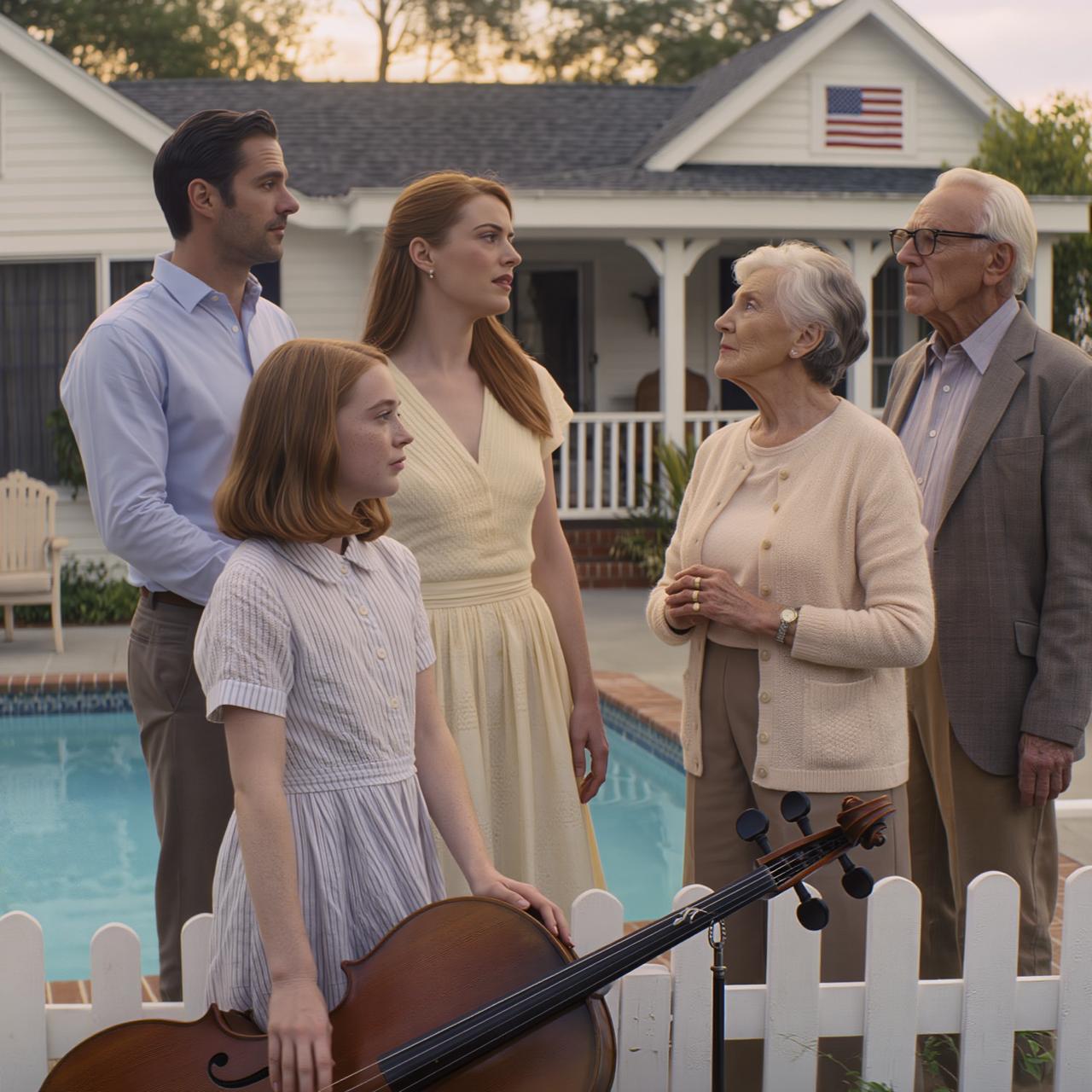
Her building was one of those modern senior communities you see advertised in glossy brochures. Brick and beige siding, neatly trimmed shrubs, a small American flag positioned near the main entrance. Inside, it smelled like lemon cleaner and expensive hand soap instead of hospital disinfectant. It wasn’t depressing in the slightest. It was controlled and professional.
There’s an important difference.
At the front desk, a staff member in a navy polo shirt smiled warmly at me.
“Good morning. Who are you here to visit today?”
“Margaret,” I said. “Margaret Haines.”
“Oh, wonderful,” she said warmly. “She’s in the main lounge right now. She mentioned you might be stopping by.”
Of course she had known I was coming.
My grandmother sat in a comfortable armchair near the window with a book open in her lap, reading glasses perched on the end of her nose like she was personally judging the author’s choices. A small vase of fresh flowers, probably from the local grocery store, sat on the side table next to her crossword puzzle book and the same familiar tin of peppermint tea that used to live in the music room.
She looked up the instant I walked into the lounge.
“Sit down,” she said immediately. “Your face is doing that thing it does when something’s wrong.”
I sat down across from her without arguing.
“They did it,” I said simply.
My grandmother didn’t flinch or look surprised. She just waited patiently for me to explain.
So I told her everything.
I kept it straightforward and factual. The missing cello from the music room. The massive excavation project in the backyard. The exact words my parents had used to justify their actions. “Family asset.” “Lucy will be fine.” “Don’t tell Grandma.”
She listened without interrupting once, the way people do when they’re carefully collecting evidence for later use.
When I finished speaking, she closed her book very slowly and deliberately.
“And how is Lucy handling this?” she asked quietly.
“She went completely quiet,” I said, my voice catching slightly. “She asked if you had changed your mind about giving it to her.”
My grandmother’s expression didn’t crumple into sadness. It hardened into something sharper. Not rage exactly. Clarity.
“She thought it was somehow her fault,” my grandmother said softly, understanding immediately.
I nodded, unable to speak.
My grandmother exhaled sharply through her nose. One precise, controlled breath.
“When did you last see the documentation file?” she asked.
“What file?”
“The cello documentation,” she said clearly. “The appraisal, photographs, all the identifying information.”
“I saw it several months ago,” I said. “You showed it to me.”
She nodded once, satisfied. “Good.”
She leaned forward slightly in her chair.
“Emily, do you have any text messages about the pool construction? Any photographs? Anything concrete that shows the renovations started immediately after I moved out?”
“I can screenshot Rachel’s social media posts,” I said, because of course Rachel had posted multiple times. Rachel would probably post live updates from her own funeral if the lighting was good enough.
My grandmother nodded decisively.
“Do that immediately.”
I stared at her. “Grandma, are you okay? What are you planning?”
She looked at me steadily over her reading glasses.
“I am not the person who should be worried right now,” she said calmly.
Then she reached for her phone with purpose.
“I’m going to make a phone call.”
I didn’t ask who she was calling. My grandmother had always kept her cards extremely close to her chest. My family had always treated that tendency as sweet and old-fashioned.
It wasn’t sweet at all.
Continúa leyendo con «SIGUIENTE »»»