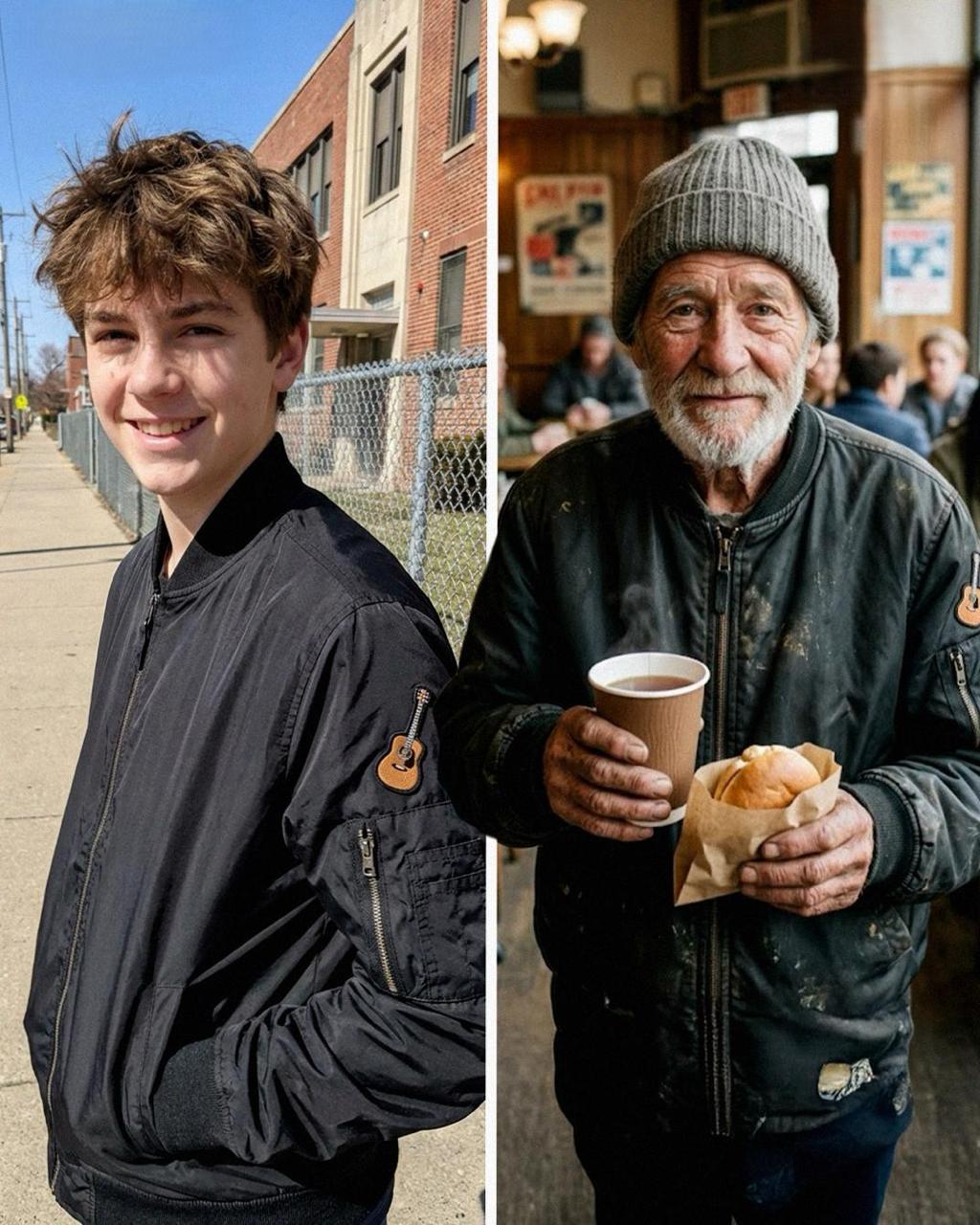
“What do you mean?” he asked.
“My son is genuinely kind,” Sarah explained, struggling to find words that would make this stranger understand.
“He’s the type of kid who apologizes when someone else bumps into him.”
The officer gave her a polite smile designed to calm worried parents.
“We’ll file the report officially, ma’am. We’ll do everything we can.”
But Sarah could see the skepticism in his eyes.
He thought she was just another panicked parent who didn’t really know her own teenager.
The next morning, Sarah went directly to Daniel’s high school.
The principal was sympathetic and understanding, allowing Sarah to sit in a small office to review security camera footage from the previous afternoon.
Students poured out through the school gates in noisy groups—laughing, pushing each other playfully, checking their phones constantly.
Then Sarah spotted Daniel in the grainy footage.
He was walking beside a girl, talking as they headed toward the street.
For a moment, Sarah didn’t recognize the girl accompanying her son.
Then the camera angle shifted slightly, and Sarah saw her face clearly.
“Maya,” Sarah whispered, recognizing the quiet girl who had visited their home a few times.
Maya had always been polite during those visits, almost careful with her words and movements.
In the security footage, Daniel and Maya walked together to the nearby bus stop.
They boarded a city bus that would take them out of the neighborhood.
Then they disappeared completely from the camera’s view.
“I need to speak with Maya immediately,” Sarah told the principal urgently.
The principal hesitated, glancing down at her desk.
“Maya doesn’t attend this school anymore,” she explained carefully.
“She transferred yesterday. That footage shows her last day here.”
Sarah’s stomach dropped with a sickening feeling.
She drove straight to Maya’s house, her mind racing with questions and growing concern.
A tall man with a hard, closed expression answered the door.
“Can I please speak to Maya?” Sarah asked, trying to keep her voice steady.
“She was with my son yesterday, and he’s missing. I just need to ask her a few questions.”
The man stared at Sarah for a long, uncomfortable moment.
Then something in his face seemed to shut down completely, his expression becoming unreadable.
“Maya isn’t here right now,” he said flatly.
“She’s staying with her grandparents for a while.”
He began closing the door before Sarah could respond.
“I’ll ask her if she knows anything about your son,” he added without emotion.
The door shut firmly in Sarah’s face.
She stood on the porch for several minutes, intuition telling her that something about the conversation felt wrong.
But she didn’t know how to push further or what questions to ask.
The weeks that followed were the darkest period of Sarah’s entire life.
She hung missing person flyers on every telephone pole and bulletin board in town.
She posted Daniel’s photo in online groups and community forums.
She called everyone Daniel knew—classmates, teachers, neighbors, distant relatives.
The police conducted searches and followed leads, but gradually the energy and urgency began fading.
Phone calls became less frequent, official reports stopped arriving, and Sarah felt increasingly alone in her desperate search.
People began using a word she absolutely hated hearing.
Runaway.
Continúa leyendo con «SIGUIENTE »»»