
My water broke instantly and I screamed in pain, collapsing on the hospital bed. Dad, who was with her, added, “That’s what you get for being selfish.” My sister texted from outside, “Tell her to hurry up and pay.” My brother called, “Just take the money and leave.” But then, with a loud bang, the door flew open and my mother froze in terror, because standing there was—
I never wanted to believe my family hated me. Even after everything they put me through, I held on to hope that somewhere beneath their cruelty was actual love. That hope died on March 15th, 2024, in room 418 of Cedar Valley Medical Center.
The pregnancy hadn’t been easy. My husband Jason died in a construction accident when I was five months along, leaving me alone with mounting medical bills and a high-risk pregnancy. The baby had a heart condition that required specialist care. Every penny I earned from my job as a paralegal went toward saving for the delivery and the immediate postnatal care my daughter would need.
Jason’s death had been sudden and devastating. One moment, he was kissing me goodbye before heading to the construction site in downtown Portland, and twelve hours later, two police officers were at my door with expressions that told me everything before they spoke a word. A scaffold collapse. Three workers killed instantly. My husband, the father of my unborn child, gone in seconds.
His life insurance policy had lapsed two months earlier. He’d forgotten to pay it during a particularly busy work period and neither of us had noticed until after his death, when I desperately needed those funds. The construction company offered a settlement of $40,000, which their lawyers made clear was generous, given that Jason had signed extensive liability waivers. I took it because I had no choice, no energy to fight, and a baby growing inside me who needed stability.
That money went toward paying off Jason’s truck, settling his credit card debt, covering the funeral expenses, and catching up on rent I’d fallen behind on during my grief-induced inability to work for six weeks. By the time everything was settled, I had $8,000 left. Not nearly enough for what was coming.
The heart condition was discovered during my twenty-week anatomy scan. The technician had gone quiet, her wand hovering over the same spot for too long. She’d excused herself and returned with Dr. Morrison, who’d studied the screen with a furrowed brow before gently explaining that my daughter had a ventricular septile defect with additional complications.
She’d need specialized monitoring, delivery at a hospital equipped with a high-level NICU, and quite possibly surgery within days of being born.
My insurance through the law firm was decent but not exceptional. They’d cover a portion of the hospital stay, a portion of the surgery, a portion of the specialist care. The portions they wouldn’t cover added up to somewhere between $20,000 and $30,000 depending on complications. Dr. Morrison had been frank. I needed to prepare financially for the worst-case scenario.
So I’d built my life around saving. The law firm had been understanding about Jason’s death, giving me bereavement leave and even a small raise when I returned. I worked overtime whenever possible, taking on extra research projects and document reviews that paid hourly. I cut every possible expense from my budget, switching to the cheapest phone plan, canceling streaming services, buying only generic brands at the grocery store.
My apartment became sparse as I sold anything with value. The nice coffee table Jason had built went for $300. His gaming console and collection of games brought in $800. My jewelry, most of it gifts from Jason over the years, was liquidated piece by piece—wedding band, engagement ring, the pearl necklace he’d given me on our first anniversary. Each sale felt like cutting away another piece of my old life, but my daughter’s future mattered more than sentiment.
I ate rice and beans most nights, oatmeal for breakfast, peanut butter sandwiches for lunch. When my co-workers ordered takeout, I declined and ate the cheap meal I’d packed. When they invited me to happy hour, I made excuses. The paralegal salary that had felt comfortable when Jason and I were both working now had to stretch to cover everything alone, and I stretched it to the breaking point.
By my eighth month, I’d managed to save $23,000. The final push came from my tax refund and selling Jason’s tool collection to one of his former co-workers.
$25,347.
I remember the exact amount because I checked my savings account balance obsessively, terrified that somehow the money would disappear. I’d skipped meals to save money, worn the same three maternity outfits for months, canceled my internet, and sold my furniture piece by piece.
By my ninth month, I had exactly $25,347 in a separate savings account. My obstetrician had been clear. With the baby’s condition, I needed to deliver at a hospital with a level-four NICU, and my insurance wouldn’t cover everything.
That money was survival.
My family knew about the fund. I’d mentioned it once at a Sunday dinner three months earlier, explaining why I couldn’t help my sister Taylor with her wedding expenses. My mother had gone silent, her fork hovering midair. My father had grunted into his mashed potatoes. My brother Kevin had laughed and said I was being dramatic about a little heart murmur.
I should have seen the warning signs in that silence. My family had never been subtle about their favoritism toward Taylor, but after Jason died, their lack of support became glaring.
My mother had come to the funeral but left early, citing a headache. My father had shaken my hand awkwardly and told me Jason should have been more careful. Kevin hadn’t come at all, texting that he had a fishing trip planned and couldn’t cancel. Taylor had attended, but spent most of the service on her phone texting with Brett about wedding venues. I’d overheard her telling our cousin that she hoped I’d get life insurance money because she really needed help with a catering deposit—at my husband’s funeral while I stood three feet away, visibly pregnant and shaking with grief.
I tried to talk to my mother about it later, calling her a week after the service to say I felt hurt by the family’s response. She’d sighed dramatically and said, “Well, what did you expect us to do? Stand around crying all day? Life goes on, sweetheart. Jason wouldn’t want you to wallow.”
I wasn’t wallowing. I was grieving. There’s a difference. But my mother had never been good at distinguishing between emotions that inconvenienced her and emotions that were valid.
The Sunday dinner where I’d mentioned the medical fund had been my last attempt at maintaining family connection. Taylor had just announced that Brett’s parents were backing out of funding the reception venue, a fancy country club that cost $28,000 for the space alone. She’d been in tears, mascara running down her face, while my mother patted her hand and assured her they’d find a solution.
“Maybe you could have the reception at a less expensive venue,” I’d suggested gently. “There are beautiful locations that cost a fraction of that.”
Taylor had looked at me like I’d suggested she get married in a dumpster.
“This is my dream wedding. I’ve been planning this for two years. I’m not downgrading because Brett’s parents are being cheap.”
“I’m just saying there are options that wouldn’t require such a huge amount of money.”
My mother had cut in then, her voice sharp.
“Taylor deserves a beautiful wedding. She’s only getting married once.”
The implication stung. I’d gotten married at the courthouse because Jason and I wanted to save money for a house. My mother had made her disappointment clear, refusing to attend and sending a card with a $50 check inside. Now, apparently, my practical wedding meant I couldn’t comment on Taylor’s extravagant one.
“I’m not saying she doesn’t deserve a nice wedding,” I’d said carefully. “I’m just offering perspective about alternatives.”
Kevin had jumped in then.
“Why don’t you help her out? You’re working. You don’t have any expenses now that Jason’s gone. You could spare some money for your sister’s big day.”
The casualness with which he’d referenced my husband’s death—as though it were a convenient financial development rather than a devastating loss—had left me momentarily speechless.
“I have plenty of expenses,” I’d finally said. “The baby has health issues. I’m saving every dollar for her medical care.”
Taylor had perked up.
“How much have you saved?”
I should have lied. Should have said a few thousand, nothing significant. Instead, still naive enough to think honesty mattered with family, I told the truth.
“About $25,000 so far. It’s all earmarked for the hospital and the NICU.”
The silence that followed was heavy and strange. My mother’s fork had stopped moving. My father had looked up from his plate for the first time all meal. Kevin had exchanged a glance with Taylor that I couldn’t interpret.
“Twenty-five thousand,” Taylor had repeated slowly. “That’s almost exactly what I need for the venue.”
“It’s for my baby’s heart surgery,” I’d said firmly. “It’s not available for anything else.”
My mother had set her fork down carefully.
“Surely the hospital has payment plans. They can’t refuse to treat a baby because you don’t pay upfront.”
“They have payment plans with interest rates that would bury me in debt for years. I’m trying to avoid that.”
“Family should help family,” my father had said, his first contribution to the conversation. “Your sister needs help now. Your baby won’t even be born for months.”
“Three months,” I corrected. “And the surgery might happen within days of delivery. I need that money accessible and ready.”
Taylor’s wedding was scheduled for June. She’d been planning it for two years and apparently her fiancé Brett’s family had backed out of paying for the reception venue. She needed $25,000 exactly.
The coincidence should have warned me.
I was admitted to the hospital on March 14th for early labor symptoms. The contractions were irregular, but Dr. Morrison wanted me monitored given the baby’s condition. I was resting, trying to sleep despite the anxiety, when my phone started buzzing at 11 p.m.
The weeks after that dinner had been increasingly hostile. Taylor had started a group text with the family, pointedly excluding me, where she apparently complained about how selfish I was being. I only knew about it because Kevin accidentally sent me a screenshot meant for someone else, showing messages about how I’d always been difficult and didn’t understand what real family meant.
My mother had shown up at my apartment twice. The first time, she tried sweetness, bringing a casserole and sitting on my worn couch while explaining how much Taylor’s happiness meant to her.
“You know how sensitive your sister is?” she’d said. “This wedding is everything to her. Can’t you find it in your heart to help?”
I’d explained again about the medical expenses, about the high-risk pregnancy, about needing every dollar for my daughter’s care. My mother’s expression had soured.
“You always put yourself first,” she’d said, standing abruptly. “Even when you were little, you were selfish. Taylor shares. Taylor thinks of others.”
Taylor, who’d borrowed $2,000 from me four years ago for a
“business opportunity” and never paid it back. Taylor, who’d used my car for six months when hers broke down and returned it with a cracked windshield and an empty gas tank. Taylor, who thought of others when it benefited her.
The second visit had been less pleasant. My mother had arrived unannounced, letting herself in with the spare key I’d foolishly given her years ago. I’d been eight months pregnant, exhausted from work, lying on the couch trying to ease the swelling in my ankles.
“We need to discuss your obligations,” she’d announced, standing over me.
“I don’t have any obligations to fund Taylor’s wedding.”
“She’s your sister. Family has obligations to each other.”
“Then where was the family when Jason died?” I’d demanded. “Where were the casseroles and the support and the offers to help? I was alone, pregnant, and drowning in grief and bills. Nobody offered me $25,000.”
My mother’s face had flushed red.
“That was different. You’re an adult. You handle your own problems.”
“And Taylor is also an adult who should handle her own problems.”
What she’d said next had chilled me to the bone.
“If you don’t give Taylor the money, I’ll make sure you regret it. I’ll tell Child Protective Services you’re an unfit mother. I’ll tell them about your depression after Jason died. About how you can barely take care of yourself. They’ll take that baby the moment she’s born.”
I’d struggled to sit up, my heart pounding.
“You wouldn’t.”
“Try me. Give Taylor the money or I’ll make your life hell. And trust me, sweetheart, you don’t want me as an enemy.”
She’d left after that, taking the spare key with her, which I’d been too shocked to ask for back. I’d sat on that couch for an hour, shaking, before finally calling the number on the business card I’d received weeks earlier.
Graham Walsh was a family law attorney who’d done some work for the firm where I worked. We’d chatted a few times in the break room when he’d come for meetings with the partners. He’d heard about Jason’s death through office gossip and had stopped by my desk one day to offer condolences and his card.
“If you ever need legal help, especially with family matters or estate issues, call me,” he’d said kindly. “I know how complicated things can get when people are grieving.”
I’d tucked the card in my wallet, not thinking I’d ever need it. But after my mother’s threat, I’d called him that same evening.
Graham had listened to everything—the wedding fund demand, my mother’s threats, the family pressure. Then he’d asked a question that surprised me.
“Do you have any of this in writing or recorded?”
I pulled up the text messages from Taylor and Kevin, the voicemails from my father calling me selfish, but I hadn’t recorded my mother’s threat.
“Here’s what I want you to do,” Graham said. “Document everything going forward. If your mother contacts you again, record it. Oregon is a one-party consent state, so you can legally record conversations you’re part of without telling the other person. Keep a detailed journal of every interaction and let me know immediately if anyone threatens you or the baby.”
I’d started documenting everything—the texts, the calls, the surprise visits. I’d installed a camera doorbell at my apartment and set my phone to automatically record all calls from family members.
Two weeks before I was admitted to the hospital, my mother had called and I caught every word.
“I’m giving you one last chance,” she’d said. “Transfer the money to Taylor’s account or there will be consequences.”
“What kind of consequences?”
“The kind that involve courts and custody battles and proving you’re an unfit parent. Do you really think you can handle a special needs baby alone? You can barely handle yourself.”
“I’m handling everything just fine.”
“Are you? Because from where I’m standing, you look like a disaster. Depressed widow, high-risk pregnancy, living in a cramped apartment on a paralegal salary. Any judge would question your ability to care for that child.”
“You’re threatening to try to take my baby because I won’t fund Taylor’s wedding.”
“I’m trying to help you see reason. Family takes care of family. You give Taylor what she needs and I’ll make sure that baby grows up in a stable environment. You refuse and I’ll make sure everyone knows what kind of mother you really are.”
I’d ended the call and immediately sent the recording to Graham. His response had been swift.
“This is extortion. We need to prepare for the possibility that she’ll escalate. When is your due date?”
“Four weeks, but the doctor says it could be at any time with the stress and complications.”
“When you go into labor, let me know immediately. I’m going to contact a colleague at the DA’s office. This kind of threat against a pregnant woman might interest them.”
He’d also suggested cameras in the hospital room.
“If your mother is willing to threaten you over the phone, she might be willing to do worse in person. Let’s make sure if she does, we have evidence.”
I’d agreed, though part of me still couldn’t believe my own mother would actually hurt me. Threaten me, yes. Bully me? Absolutely. But physical violence seemed beyond even her cruelty.
Continúa leyendo con «SIGUIENTE »»»
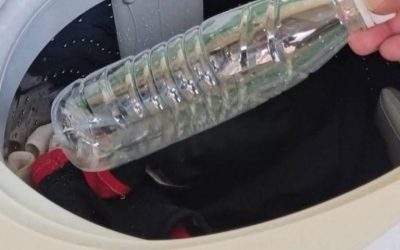
Un truco genial para la colada: Por qué meter una botella de plástico vacía en la lavadora puede ahorrarte tiempo y molestias.

Cuando gana su propio dinero, no necesita a nadie.

Mi hermana dijo que estaba embarazada de mi esposo…

Lirio de la paz: gracias a este ingrediente, florecerá hasta 10 años seguidos.

El dolor de ver a su hija enferma no era nada comp…